Our Location
304 North Cardinal St.
Dorchester Center, MA 02124

304 North Cardinal St.
Dorchester Center, MA 02124
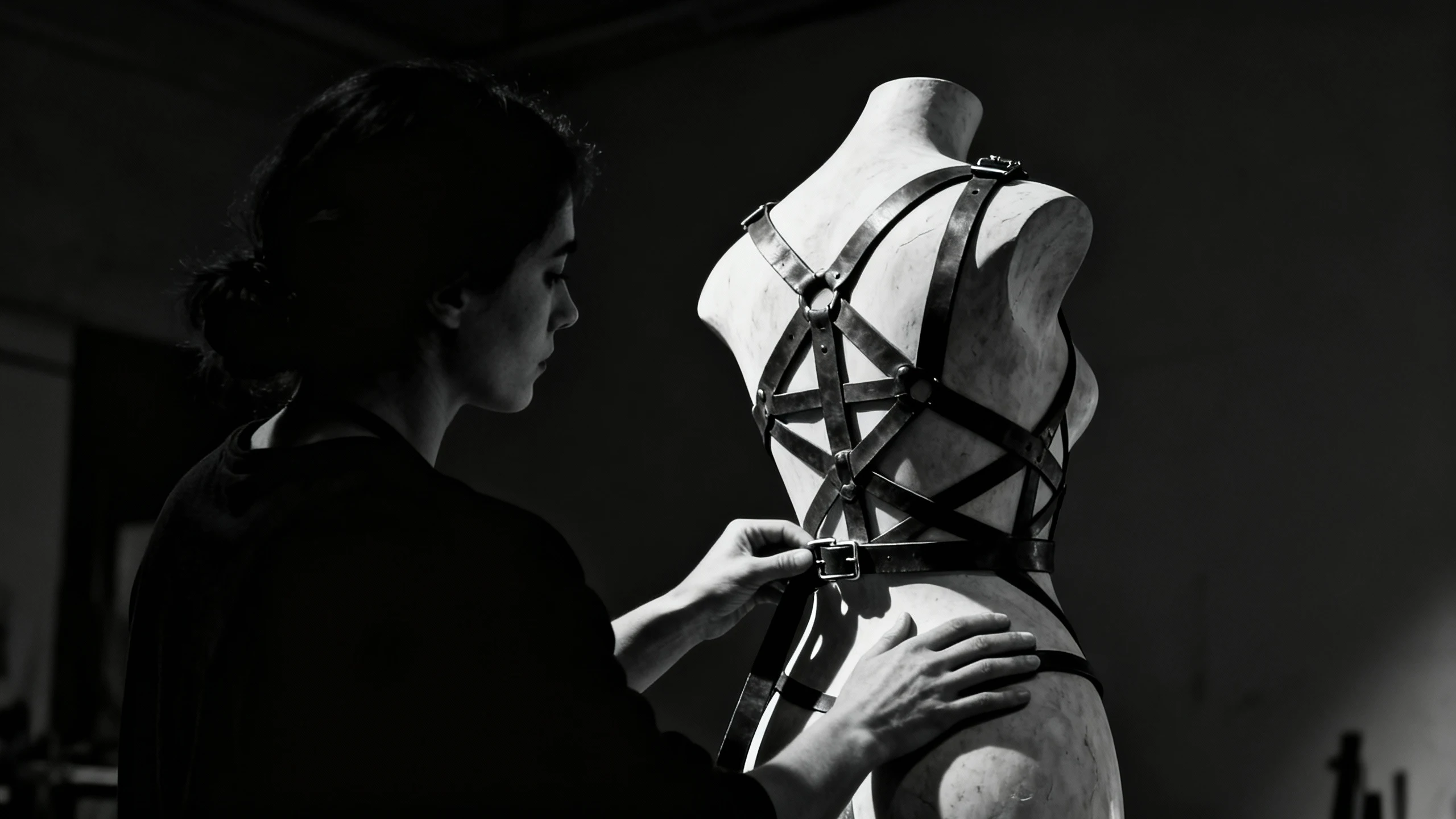
Bondage is not about restriction; it is the art of drawing new lines upon the human canvas. It is a dialogue of tension and trust, a form of sacred geometry. Respect for the medium and the canvas is paramount.
Nerve compression is the single greatest risk in bondage. Sustained pressure on major nerve bundles (especially at the wrists, elbows, ankles, and knees) can lead to temporary or even permanent damage (neuropathy). Never apply intense, prolonged pressure directly over joints. The art lies in securing the flesh, not crushing the framework. Always have safety shears within immediate reach. Neck bondage is an absolute hard limit for all but the most advanced, medically knowledgeable practitioners and is not covered here.
- Rope (Jute, Cotton): Offers an organic, sometimes rough texture. It is a line, a pencil for drawing geometric patterns. Its mastery lies in knot-work and the distribution of pressure.
- Leather (Cuffs, Harnesses): Offers a smooth, containing pressure. It is a structure, an architectural element that defines and frames the body. Its safety lies in proper fit and the avoidance of over-tightening.
Respect the sacred geography of the body. The safest areas for pressure and restraint are the fleshy, muscular parts of the body: the biceps, the thighs, the torso. Avoid the “bony” areas where nerves run close to the surface. Study anatomy. Know your canvas before you ever touch a brush.